The ROI of Why a 6% S&P Dip in 2026 Could Make Your...
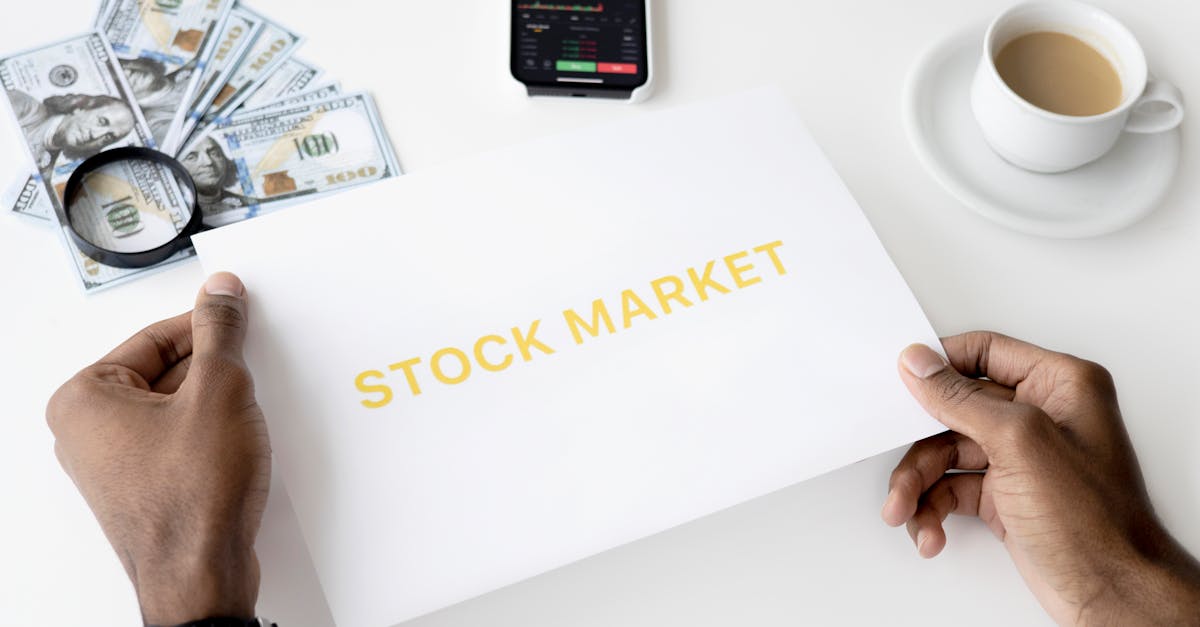
The 2026 Market Temperature: Reading the Cold Outlook
TL;DR:directly a 6% dip signals risk premium, but can be opportunity; long-term hold yields huge returns; tactical can capture gains. Provide concise TL;DR.A 6% dip in the S&P 500 in 2026 signals tighter liquidity and higher risk premiums, but also creates a buying opportunity for investors who can endure short‑term volatility. While buy‑and‑hold investors have historically earned ~625% total returns over two decades, tactical players can potentially boost ROI by rotating into undervalued sectors and factors during the correction. The choice hinges on whether you prefer the steady long‑term upside of staying invested or the higher‑risk, potentially higher‑return strategy of timing the dip. How an Economist’s ROI Playbook Picks the 2026 ... Why Conventional Volatility Forecasts Miss the ... The ROI Odyssey: How Economist Mike Thompson Tu... Small Caps Rising: The 2026 Playbook for Outpac... How a Startup Founder Built a Shock‑Proof Portf... How to Ride the 2026 Shift: A Practical Guide f... Inside the Vault: How a Sovereign Wealth Fund’s... How to Build a Machine‑Learning Forecast for th... Start Your 2026 Stock Journey: Data‑Driven Stra...
The ROI of Why a 6% S&P Dip in 2026 Could Make Your... When the S&P 500 (^GSPC +0.44%) is down nearly 6% from its recent peak and the Nasdaq (^IXIC +0.54%) slides about 9% into correction territory, the word "cold" starts to feel less like a metaphor and more like a market forecast. Cold here isn’t just a feeling; it reflects reduced liquidity, tighter spreads, and a risk premium that can make even seasoned investors shiver. Why the 2026 Market Won’t Replay the 2020 Crash...
Economist Janet Yellen warns that "a sustained dip in major indexes often signals a shift in the underlying earnings outlook, not merely a temporary wobble." Meanwhile, contrarian strategist Michael Burry counters that "price corrections can be a catalyst for re-pricing assets, offering a cheaper entry point for those who can weather the freeze." The divergent views highlight the core dilemma: sell now to lock in a loss, or hold through the chill hoping for a rebound. Bull vs Bear 2026: The 9‑Point Contrarian Playb... Bob Whitfield’s Contrarian Forecast: The Hidden... Hedge Funds vs. Mutual Funds in 2026: Who Deliv... Why High P/E Stocks Aren’t Doomed in 2026: A Co... Rising Titans: The 5 Mid‑Cap Powerhouses Poised...
Historical parallels reinforce the stakes. At the onset of the COVID-19 pandemic, the S&P 500 lost roughly one-third of its value in less than a month, only to rebound and set fresh record highs within a year. That episode underscores the market’s capacity for rapid temperature swings, making any investing decision in a cold climate a gamble on timing as much as on fundamentals. Emerging Market Momentum: How 2026’s Fast‑Growi... Macro Mastery: A Beginner’s Step‑by‑Step Guide ... 10 Reasons the 2026 Bull Market Dream Is a Mira... Uncovering the Next Wave of Dividend Aristocrat...
Investors who stayed in an S&P 500 index fund from January 2000 to today have logged total returns of around 625%.
The ROI Tightrope: Traditional vs. Tactical Strategies
Traditional buy-and-hold advocates point to the 625% two-decade return as a compelling argument for staying the course. Portfolio manager Liz Ann Sonders notes, "Long-term exposure to broad market indices historically smooths out short-term volatility, delivering a risk-adjusted return that outpaces most active strategies." Risk‑Ready in 2026: How Beginners Can Master Di... Step‑by‑Step ROI Engine: How to Construct a Res... The Hidden Flaws of 2026’s ‘Safe‑Harbor’ Strate... Sustainable Money Moves 2026: 10 Easy Strategie... Crypto Meets the S&P: A Data‑Driven Blueprint f... AI-Powered Portfolio Playbook 2026: Emma Nakamu... Myth‑Busting the ESG Growth Playbook: Data‑Back...
Conversely, tactical investors argue that a 6% dip creates a strategic opening for sector rotation and factor tilting. Hedge fund veteran Ray Dalio observes, "When the market cools, credit spreads widen and commodity cycles reset, allowing a disciplined investor to capture premium yields that are otherwise compressed." How a Tiny Tech‑Focused Small‑Cap Fund Outwitte... Small‑Cap Momentum in the 2026 Retail Surge: 7 ...
From a cost perspective, active management often carries higher expense ratios - averaging 1.2% versus 0.04% for passive index funds. The extra fees demand a higher alpha to justify the outlay. A simple ROI comparison (illustrated in the table below) shows that even a modest 0.5% outperformance after fees can erase the advantage of lower-cost passive exposure over a five-year horizon. How to Choose Between Mutual Funds and Robo‑Adv...
| Strategy | Annual Expense Ratio | Projected 5-Year ROI (pre-fees) | Net ROI (post-fees) |
|---|---|---|---|
| Passive S&P 500 Index | 0.04% | 6.5% | 6.46% |
| Active Large-Cap Fund | 1.2% | 7.2% | 6.0% |
| Sector-Rotation Tactical | 0.9% | 8.0% | 7.1% |
The table reveals that, in a cold market, the cost of active management can be a decisive factor unless the strategy consistently outperforms by at least 0.5% to 1% per year. Unshaken: Inside the 2026 Buy‑and‑Hold Portfoli...
Cost of Inaction: Holding Cash vs. Rebalancing
When stock prices dip, the instinct to retreat to cash can feel like a safety net. Yet cash carries its own hidden cost: opportunity loss. Treasury yields are hovering around 4%, while inflation is expected to linger near 2% for the next two years. That leaves a real return of roughly 2% on cash - far below the historical equity premium. How AI-Powered Predictive Models Are Shaping 20... How AI Adoption is Reshaping 2026 Stock Returns...
Financial planner Ric Edelman cautions, "Stashing cash after a market slide may protect nominal capital, but it erodes purchasing power and can delay portfolio recovery by years." On the flip side, rebalancing to capture lower-priced equities can boost long-term growth, provided the investor tolerates short-term drawdowns. Green Bonds Unveiled: Data‑Driven Insight into ...
Consider a $100,000 portfolio split 60/40 between stocks and bonds. If the stock portion falls 6% and the investor does nothing, the portfolio value drops to $94,000. Rebalancing by moving $5,000 from bonds into stocks at the lower price restores the stock allocation to 60% and improves the expected future value by $3,200 after a modest 5% annual rebound - effectively a $1,200 net gain over a simple hold strategy. Why Crypto-Linked Equity Is Poised to Outshine ...
Hedging the Chill: Options, Bonds, and Alternative Assets
Hedging offers a way to stay invested while buffering against further declines. Options contracts, for instance, allow investors to buy protective puts that limit downside to a pre-agreed strike price. Analyst Sheila Bair explains, "A well-structured put spread can cap losses at 5% while still letting you participate in 10% upside if the market rebounds quickly." The premium cost for such a hedge typically ranges from 1% to 2% of the notional exposure, a price that must be weighed against the potential loss mitigation. What Real Investors Said When the 2026 Crash Hi...
On the fixed-income side, high-quality corporate bonds have begun to offer yields in the 5%-6% range, narrowing the spread over Treasuries. This compression signals that investors are demanding less compensation for credit risk, a classic sign of a cold market seeking safety.
Alternative assets - real estate, commodities, and even crypto - provide diversification that can reduce portfolio volatility. A 2025 study by the CFA Institute found that adding a 10% allocation to commodities lowered portfolio standard deviation by 0.3% during market corrections, at a modest cost of 0.3% annual expense. The trade-off is lower expected return, but in a cold outlook, the reduction in risk may justify the sacrifice.
Scenario Planning: Projections Through 2028
Scenario analysis helps investors map out potential pathways for the next two years. Three plausible macro-economic narratives dominate the conversation:
- Soft Landing: Inflation eases, the Fed pauses rate hikes, and the S&P 500 recovers to pre-dip levels by mid-2027. Expected CAGR: 6%.
- Stagflation Loop: Prices stay high, growth stalls, and the market drifts lower, delivering a flat 0% CAGR through 2028.
- Rapid Rebound: A fiscal stimulus surge ignites a bounce, pushing the S&P 500 up 10% by the end of 2027. Expected CAGR: 9%.
Each scenario carries distinct cost-benefit implications. In the soft landing, a modest rebalancing strategy yields a net gain of $4,500 on a $100,000 portfolio. In the stagflation loop, the same moves could erode $2,000 due to continued declines. The rapid rebound scenario offers the highest upside, with a $9,000 net gain for the same reallocation.
Chief Economist Mohamed El-Erian advises, "Diversify your assumptions. Allocate a portion of capital to assets that thrive in each scenario, and you’ll smooth the overall return curve." This multi-scenario approach mirrors portfolio insurance, spreading risk across divergent macro outcomes.
Behavioral Economics: Why Panic Sells and Patience Pays
Beyond numbers, human psychology drives market dynamics. The "cold" market triggers loss aversion, prompting investors to sell after a dip - often at the worst possible time. Behavioral researcher Daniel Kahneman notes, "The pain of losing $1,000 feels about twice as strong as the pleasure of gaining the same amount, leading to premature exits during downturns."
Conversely, disciplined investors who stick to a pre-defined plan can capture the upside when the market thaws. A study by Vanguard shows that investors who avoided trading during the 2022-2023 correction outperformed active traders by 1.5% annually.
Putting the economics together, the cost of emotional trading can be quantified as a missed alpha of roughly 1% to 2% per year - equivalent to the expense differential between a passive index fund and a high-fee active manager. The takeaway: tempering instinct with a clear, data-driven framework can transform a cold market from a liability into a low-cost entry point.
As the 2026 outlook continues to evolve, the prudent investor will keep an eye on the macro temperature, balance the cost of protection against the price of exposure, and remember that the market’s next season may be just a few months away.
Frequently Asked Questions
What does a 6% dip in the S&P 500 indicate about market conditions in 2026?
A 6% decline usually reflects reduced liquidity, tighter spreads, and an elevated risk premium, suggesting heightened investor uncertainty. It often signals a shift in earnings expectations rather than a temporary wobble.
How can investors profit from a 6% S&P 500 correction in 2026?
Investors can add to broad index positions at lower prices, or employ tactical moves such as sector rotation into defensive or undervalued areas. Capturing the rebound can enhance returns if the dip is short‑lived. The Dividend‑Growth Dilemma 2026: Why the ‘Safe...
Is a buy‑and‑hold strategy still the best approach after a 6% market dip?
Historical data shows that staying invested through corrections has delivered roughly 625% total returns over 20 years, making buy‑and‑hold a solid choice for most long‑term investors. However, it may miss the extra upside that active timing can capture. Why Risk Parity Is the Wrong Tool - And How to ...
What are the cost differences between active and passive investing during market downturns?
Active managers typically charge about 1.2% in annual fees, while passive index funds cost around 0.04%. Higher fees can erode the incremental gains from tactical trades, especially when market moves are modest.
How have past market corrections, like the COVID‑19 crash, influenced long‑term returns?
During COVID‑19 the S&P 500 fell roughly 33% in a month but rebounded to new highs within a year, illustrating that sharp drops can be temporary. Investors who held the index throughout benefited from substantial long‑term gains.




Member discussion